
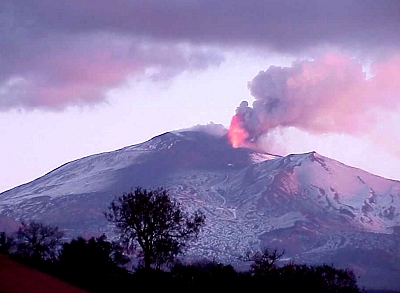
Mt. Etna – Daytime View of the 2001 Eruption
There have been more than 200 known eruptions of Mt. Etna recorded in the geological strata since 6000BC. This makes Mt. Etna one of the most active volcanoes in the world. Even so, Etna is not a killer volcano.
Since man started recording events some 3500 years ago less than 80 deaths have been attributed to Mt. Etna. This low fatality rate is attributed to several factors. First, because it is a very active volcano, catastrophic eruptive forces, such as the Mt. Saint Helens eruption, do not develop. Second, inhabited areas are not situated in dangerous proximity to the volcanic vents. Third, due to the viscous nature of the lava the pyroclastic flows slow to just tens of feet per hour by the time they extend a kilometer or more away from the emissive vent.
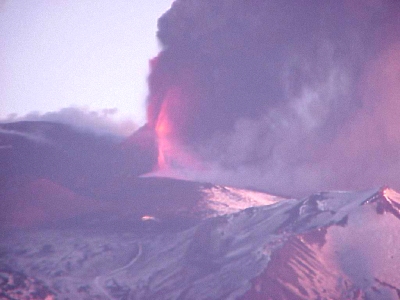
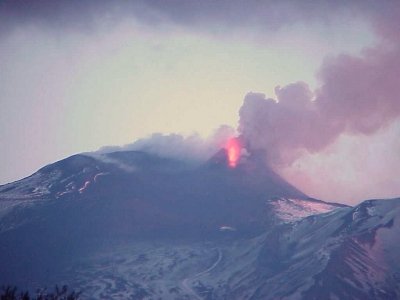
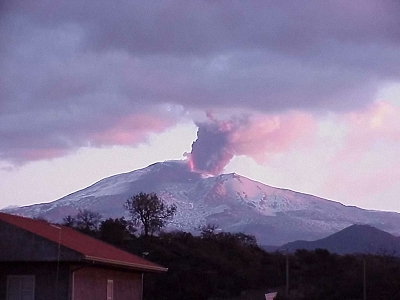
Here are some photos taken form a friends balcony and roof-top in Nicolosi just outside of the Sicilian city of Catania.
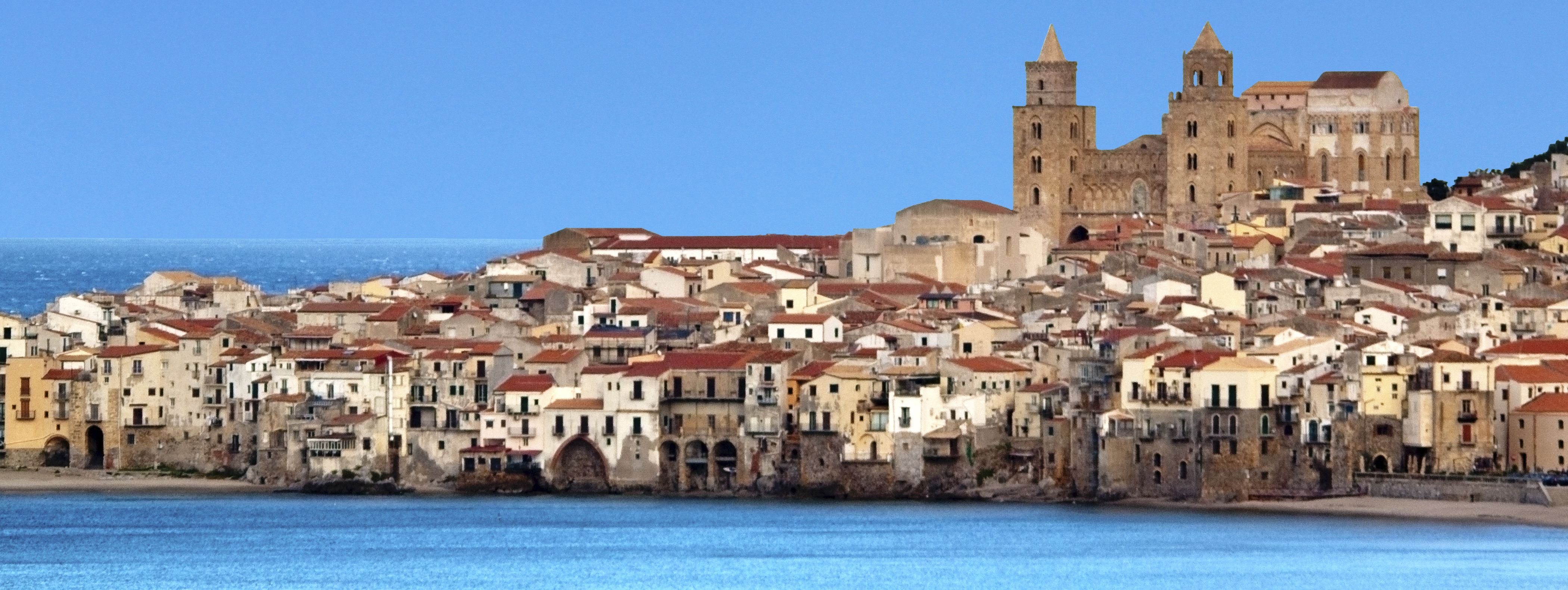
The first known non-indigenous people to settle in Sicily were the Sikels. Around BC 1400 these people migrated from the Italian mainland and coexisted peacefully with the Sicans. It was around the same time that the Elymi people also began to settle on the island.
Around BC 1000, the Phoenicians began to settle along the coasts of Sicily. They, too, peacefully coexisted with the Sicans, Sikels and Elymi. The earliest literary mention of Sicily’s history and its early inhabitants can be found in Homer’s The Odyssey – expressed as the land of the Cyclopes, the land of the Laestrygonians and the island of Aeolus.
Sicily’s history took a dramatic turn when the Greeks began to colonize the island, 300 years later.
Around BC 735, the Greeks established Naxos – between modern day Catania and Taormina – as an expansion of Magna Graecia (the Greek colonies in Southern Italy). It was the first Greek colony on the island. The Greeks also established Syracuse around the same time on the southeastern coast of the island. This colonization marked the birth of one of the most influential eras in Sicilian history. As the old Sicilian civilizations were virtually absorbed into Hellenistic culture, the Greeks quickly spread their empire throughout Sicily. During this era, they built the Valley of the Temples, located in Agrigento. Most of this temple complex still stands today and is regarded as one of the most impressive temple complexes outside of Greece.